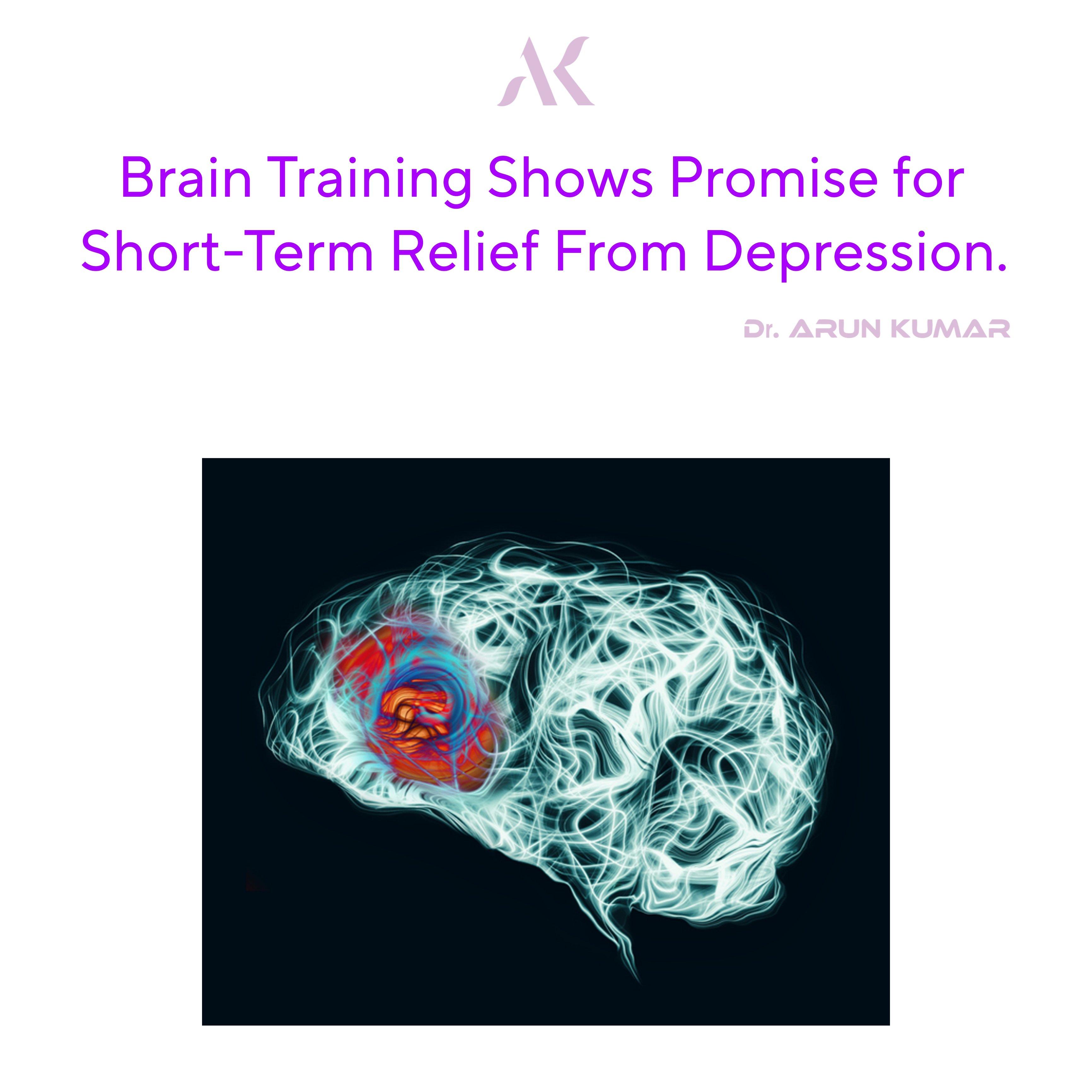


Brain training and neurofeedback techniques show emerging promise for providing short-term relief from symptoms of depression, though research is still in early stages.
Key Findings on Brain Training & Depression
▫️Immediate Mood Improvements: Studies on non-invasive neurofeedback—which lets individuals monitor and learn to regulate their own brain activity (such as in regions linked to motivation and reward)—have found that a single or short series of sessions can produce immediate, short-term mood boosts lasting into the following day.
▫️Home-Based Gaming and Stimulation: Recent clinical trials indicate that non-invasive brain stimulation or cognitive-training games can be safely and feasibly used at home by individuals managing major depression, though researchers note that long-term efficacy and exact mechanisms require further study.
▫️Cognitive Function Benefits: Cognitive and working memory training can help alleviate associated cognitive impairments (like attention or processing speed deficits) and offer modest secondary benefits to overall mood, particularly when paired with traditional care.
▫️Limitations: Many commercial wearable devices and brain-training programs lack independent clinical trials, proper control groups, or proof of long-lasting structural changes in the brain.
#BrainTraining
#Neurofeedback
#DepressionRelief