
India’s Commanding Triumph Over Uzbekistan Sets Up a Decisive Finale
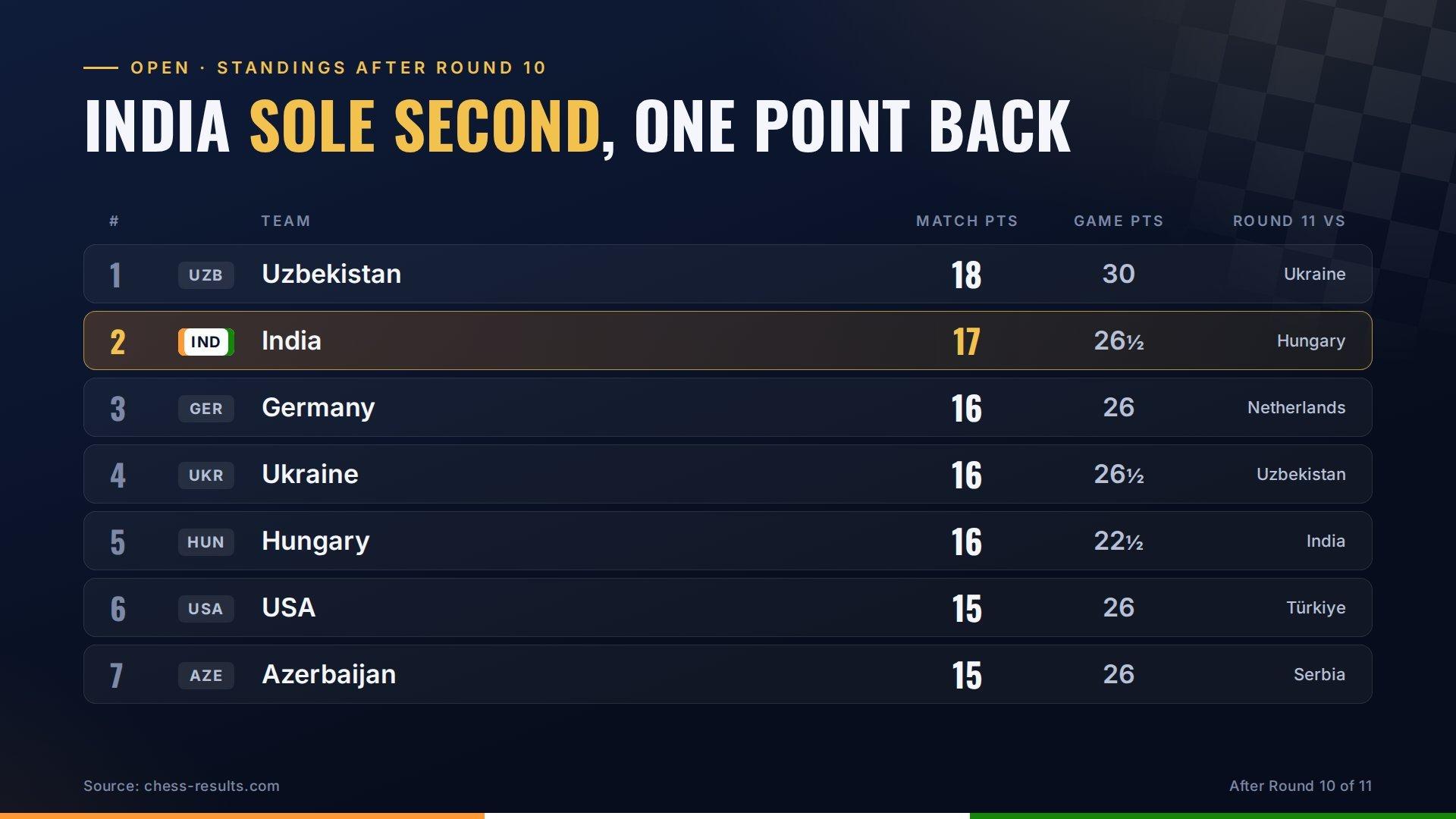
Team 🇮🇳 produced an emphatic and strategically significant victory over Team 🇺🇿 2 in the penultimate round of the Chess Olympiad 2026, prevailing by an impressive margin of 3.5–0.5. The result not only demonstrated India’s formidable collective strength but also reinforced the country’s status as one of the most consequential forces in contemporary international chess. With the final round against Hungary now approaching, 🇮🇳 enters the decisive encounter with considerable momentum, confidence and competitive authority.
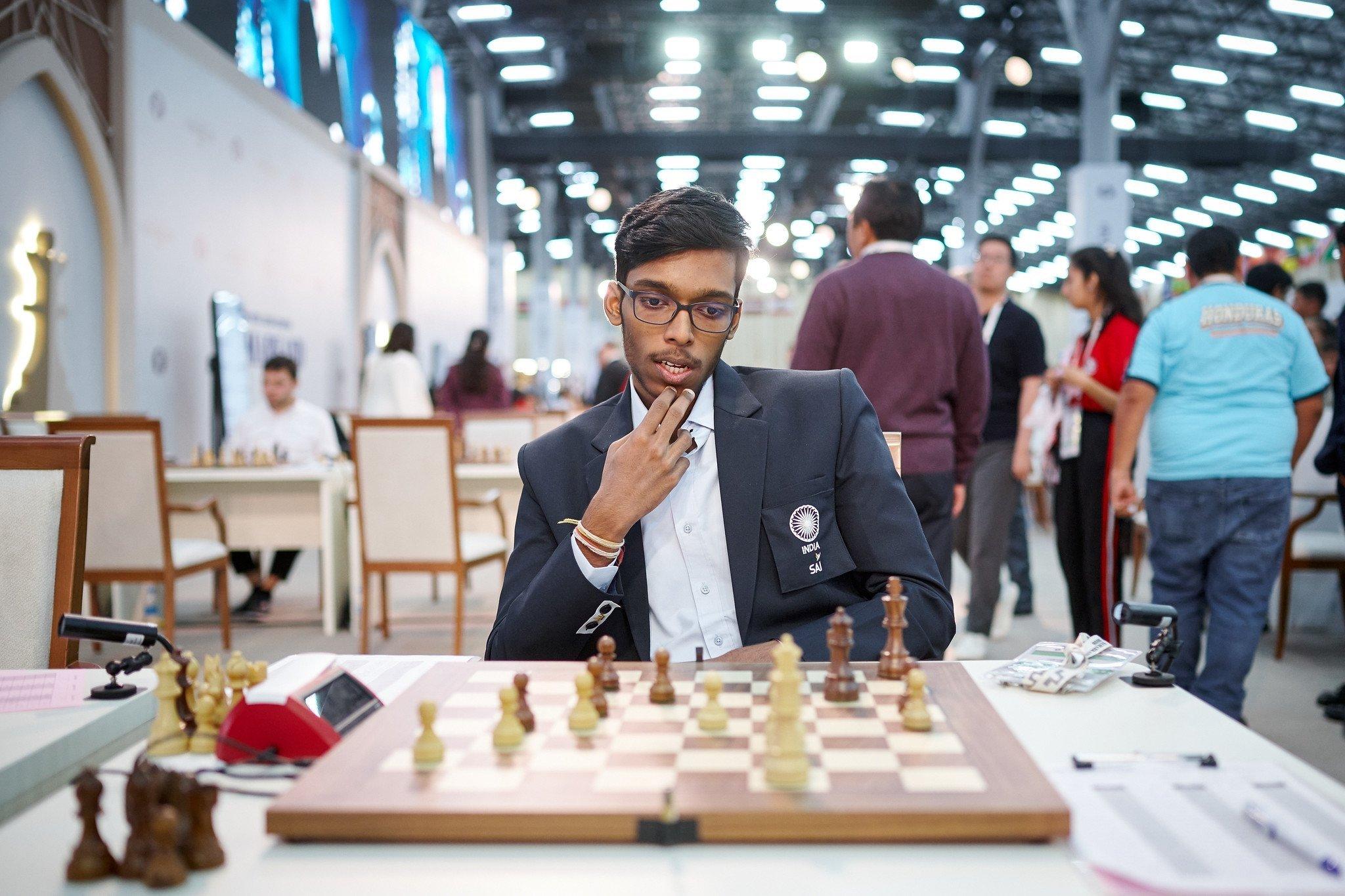
The most conspicuous achievement came from Praggnanandhaa, who defeated Jakhongir Vakhidov while commanding the black pieces on Board 1. Winning with Black is often regarded as a particularly demanding accomplishment, since the second player must initially withstand the initiative traditionally associated with the opening move. Praggnanandhaa’s victory, therefore, reflected not merely technical proficiency but also psychological resilience and an ability to transform defensive circumstances into an assertive and ultimately victorious performance. His success on the foremost board established the tone for India’s broader domination.
On Board 2, Arjun Erigaisi drew against Abdimalik. Although a draw may appear less spectacular than a decisive victory, it can possess immense strategic value in a team competition. By neutralising his opponent and avoiding unnecessary risks, Arjun contributed to India’s secure overall structure. In Olympiad chess, where every half-point can influence the final standings, disciplined consolidation is often as valuable as audacious brilliance. 🇮🇳 triumph was completed by the victories of Nihal and Gukesh on the third and fourth boards. Nihal overcame Suyarov, while Gukesh defeated Ortik Nigmatov, ensuring that Uzbekistan 2 had little opportunity to recover after the early setbacks. Their performances illustrated the remarkable depth available within the Indian team. India’s strength does not depend exclusively upon one or two celebrated grandmasters. It emerges from the harmonious interaction of several players capable of converting positional advantages, exploiting tactical inaccuracies and maintaining composure under immense pressure. 3.5–0.5 scoreline is consequently more than a numerical success. It represents a collective demonstration of preparation, adaptability and competitive maturity. India’s players appeared to complement one another effectively, combining Praggnanandhaa’s high-board authority, Arjun’s steadfastness, Nihal’s dynamism and Gukesh’s decisive force. Such equilibrium is indispensable in a team event, where individual excellence must be subordinated to a common objective.
🇮🇳 will now confront Hungarians in the eleventh and final round. Predicting the outcome with certainty would be imprudent, since a final-round contest can generate extraordinary tension and unpredictable shifts in momentum. Nevertheless, 🇮🇳 should enter the match as a psychologically strengthened side. If the players maintain the concentration displayed against Uzbekistan 2, avoid speculative errors and exploit even marginal advantages, 🇮🇳 has a compelling prospect of securing another commanding result. Forthcoming encounter promises to be a fitting conclusion to Bharat's campaign a contest in which preparation, endurance and nerve will be tested to their utmost limits. Regardless of the final outcome, 🇮🇳 victory over 🇺🇿 2 has already affirmed the team’s brilliance.
Final ranklist is here.