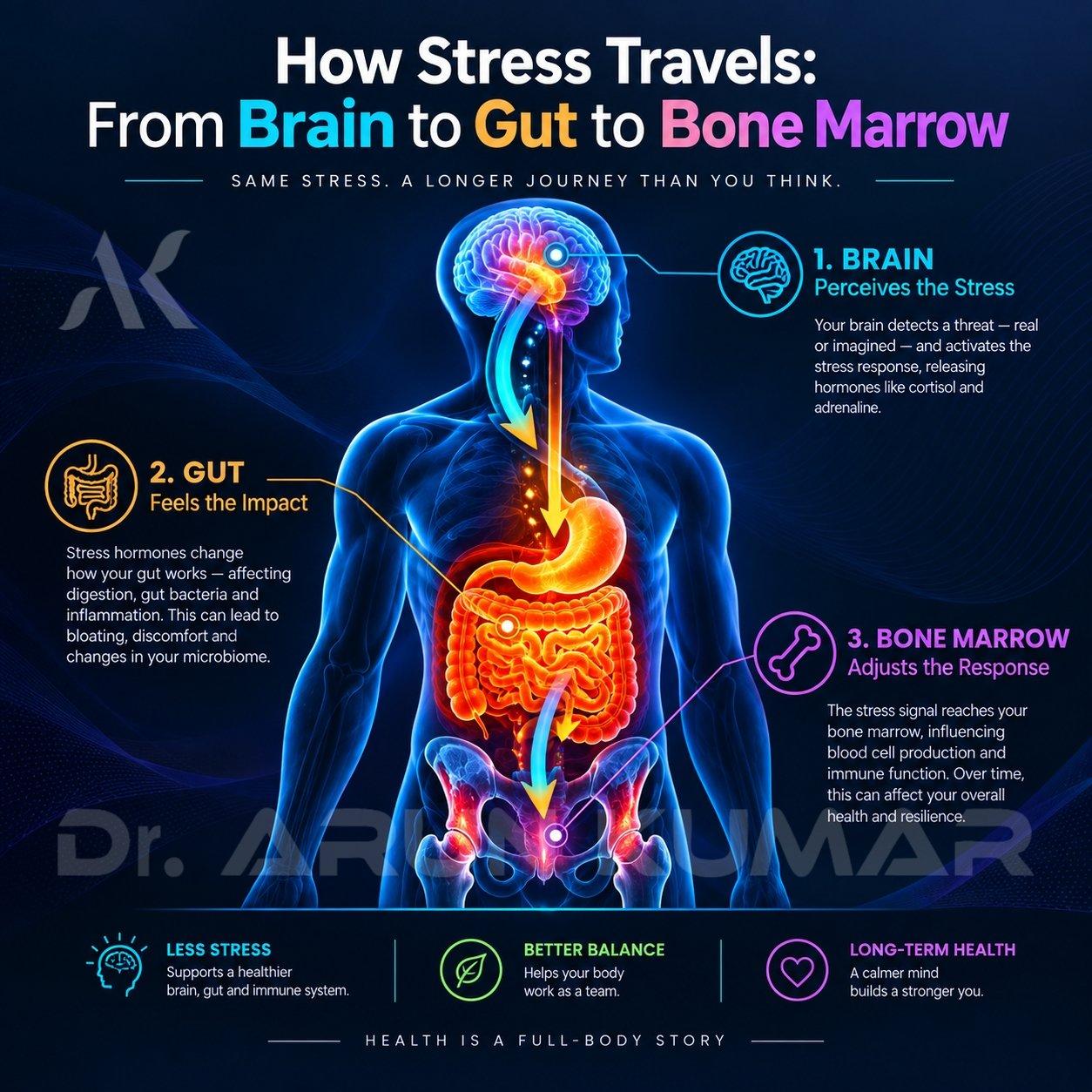


Psychological stress travels from the brain to the gut and down to the bone marrow by suppressing specific brain regions, which triggers a sympathetic nerve cascade that starves blood-forming stem cells of a vital microbial metabolite
The Step-by-Step Chain of Events
▫️Brain Suppression: Chronic or psychological stress quiets neuronal activity in two specific brain regions—the medial prefrontal cortex (mPFC) and the periaqueductal gray (PAG).
▫️Sympathetic Signaling: The deactivation of these regions signals the body's sympathetic nervous system (the fight-or-flight pathway) to send stress outputs directly to the digestive tract.
▫️Loss of Mucin: These sympathetic signals reduce intestinal mucin levels, thinning the protective gel-like mucus layer lining the gut.
▫️Microbiome Shift: With less protective mucin, a beneficial gut bacterium called Lactobacillus reuteri sharply declines in abundance.
▫️Spermidine Depletion: L. reuteri normally produces high amounts of spermidine, a natural compound that triggers cellular cleanup and recycling. Microbiota-derived spermidine levels drop in both the gut and the bloodstream.
▫️Bone Marrow Aging: The spermidine shortage reaches the bone marrow, suppressing mitochondrial autophagy (internal cellular cleanup) and increasing oxidative and ferroptotic stress in hematopoietic stem cells (HSCs). Over time, this leads to stem cell dysfunction and premature immune aging.
#GutBrainAxis #MindBodyScience #StressResponse