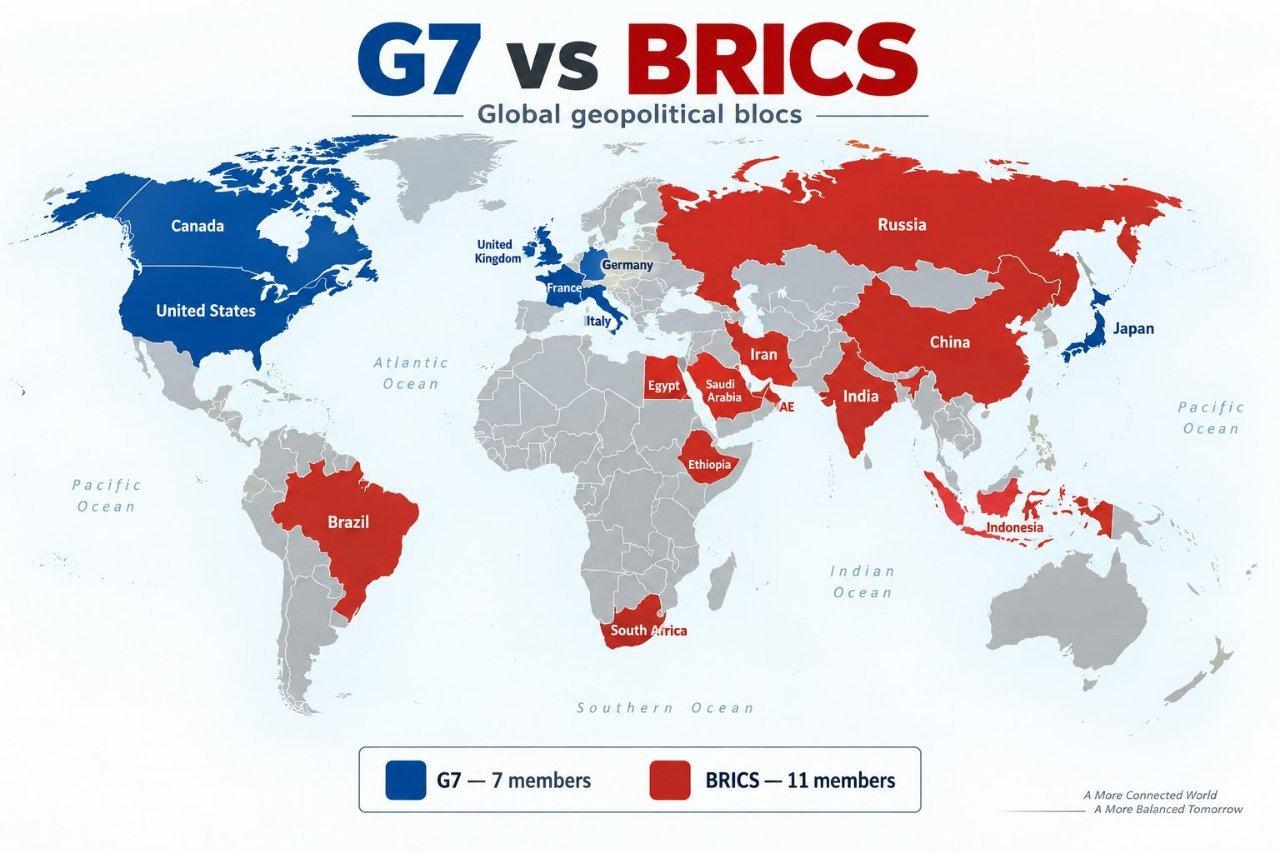


G7 vs BRICS
G7 — about $55.3 trillion
🇺🇸 United States: $32.38T
🇩🇪 Germany: $5.45T
🇯🇵 Japan: $4.38T
🇬🇧 United Kingdom: $4.26T
🇫🇷 France: $3.60T
🇮🇹 Italy: $2.74T
🇨🇦 Canada: $2.51T
BRICS (11 members) — about $35.2 trillion
🇨🇳 China: $20.85T
🇮🇳 India: $4.15T
🇷🇺 Russia: $2.66T
🇧🇷 Brazil: $2.64T
🇮🇩 Indonesia: $1.54T
🇸🇦 Saudi Arabia: $1.39T
🇦🇪 UAE: ~$0.62T
🇿🇦 South Africa: ~$0.48T
🇪🇬 Egypt: ~$0.43T
🇮🇷 Iran: ~$0.30T
🇪🇹 Ethiopia: ~$0.20T
Since the October 2023 post, G7 nominal GDP rose from $45.9T to about $55.3T and expanded BRICS from $30.8T to about $35.2T. The dollar gap therefore widened, mainly because of US growth.
In purchasing-power-parity terms the picture is reversed: IMF figures for 2025 put BRICS at about 40.5% of world output versus 28.3% for the G7.