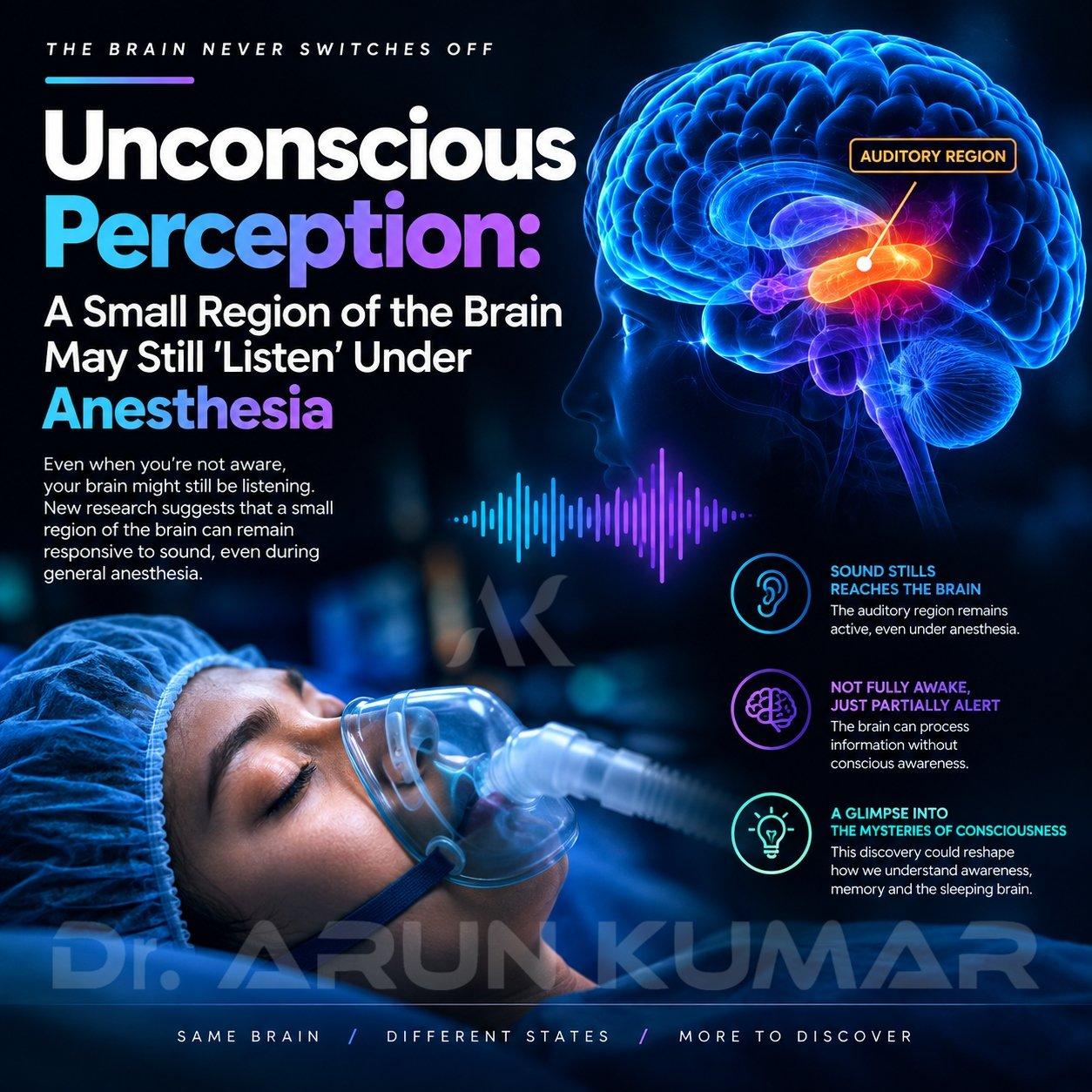


A small region deep inside the brain—the hippocampus—can still process sounds, understand language, and predict upcoming words even when a person is fully unconscious under general anesthesia.
Key Findings From the Study
▫️The Brain Region: Researchers recorded activity from individual neurons in the hippocampus, a part of the brain normally tied to memory and learning.
▫️Sound and Tone Recognition: When patients listened to repeating tones interrupted by unusual sounds ("oddball" tones), hippocampal neurons detected the differences. This response grew stronger over 10 minutes, showing a form of background learning without awareness.
▫️Language and Meaning: When patients listened to podcast-style speech, individual neurons responded to the length, type, and meaning of the words, distinguishing between nouns, verbs, and adjectives.
▫️Predicting Words: Neural firing patterns even showed signs of anticipating or predicting the meaning of the next word in a sentence.
▫️No Conscious Memory: None of the patients had any conscious awareness or memory of the sounds or speech after waking up.
What This Means
Published in Nature, this research shows that complex background computations can happen completely separate from conscious awareness. It does not mean patients are secretly awake or aware during surgery, but it proves the brain is far more active behind the scenes than previously understood.
#BrainScience #Neuroscience #MedicalResearch