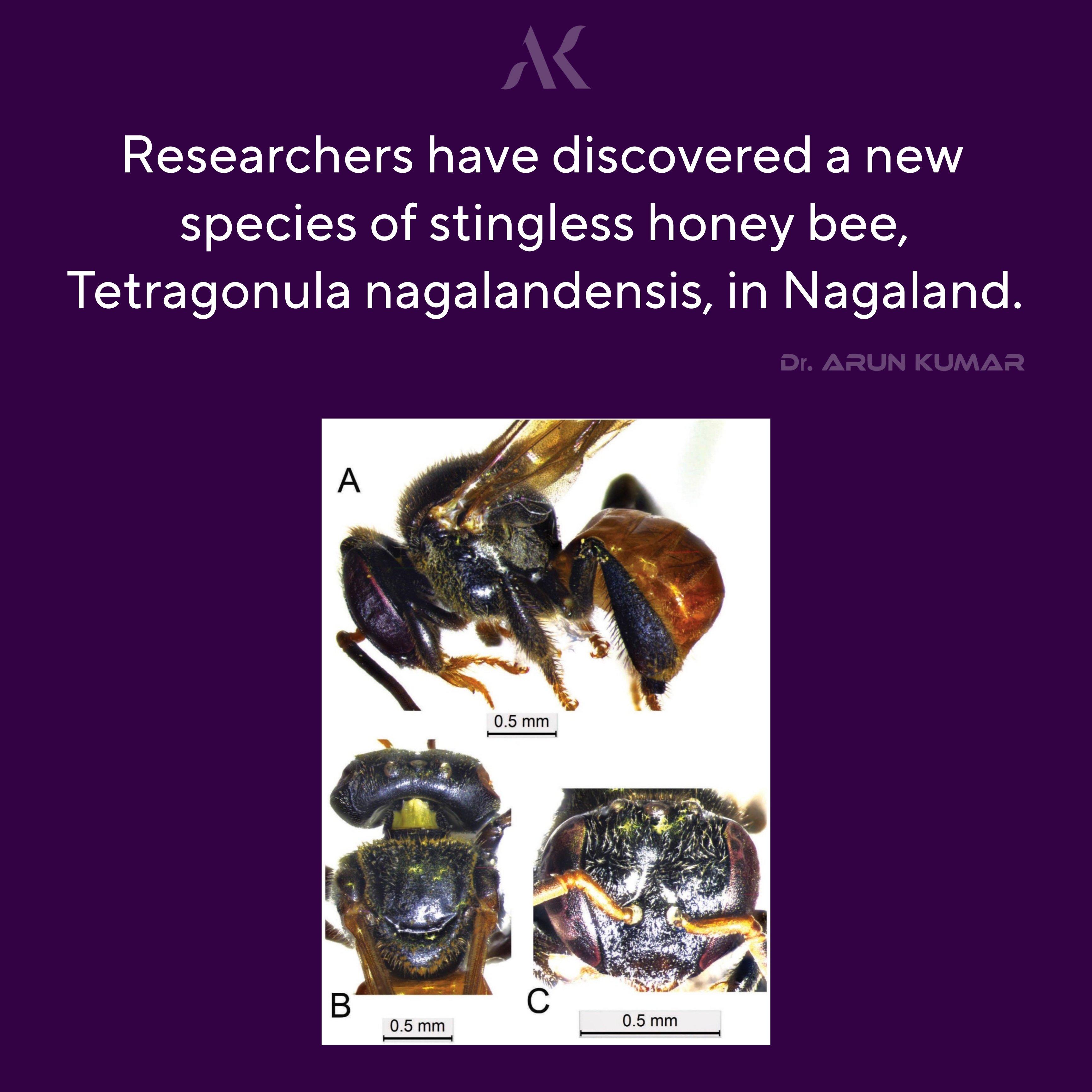


Scientists have discovered a new underground-dwelling stingless honey bee species named Tetragonula nagalandensis in Nagaland, bringing India's known total of stingless bee species to 19. Reported by Research Matters, the finding highlights the unique biodiversity of Northeast India.
Key Facts About Tetragonula nagalandensis
▫️Location: First found in the Medziphema region of Nagaland by a multi-institutional team of researchers.
▫️Subterranean Hives: Unlike common bees that build nests in trees, these bees live up to 80 centimeters beneath the damp soil.
▫️Nest Structure: They build compact clusters of brood cells protected by thin layers of wax and organic materials.
▫️Size: They are quite small, with a body length of about 5 millimeters.
▫️Identification: Female bees look very similar across species, so researchers studied male reproductive anatomy—specifically a C-shaped notch and curved penis valve—to confirm it as a new species.
▫️Ecological Importance: They serve as vital natural pollinators for local wild vegetation and crops.
#NewDiscovery #NagalandBiodiversity #TetragonulaNagalandensis