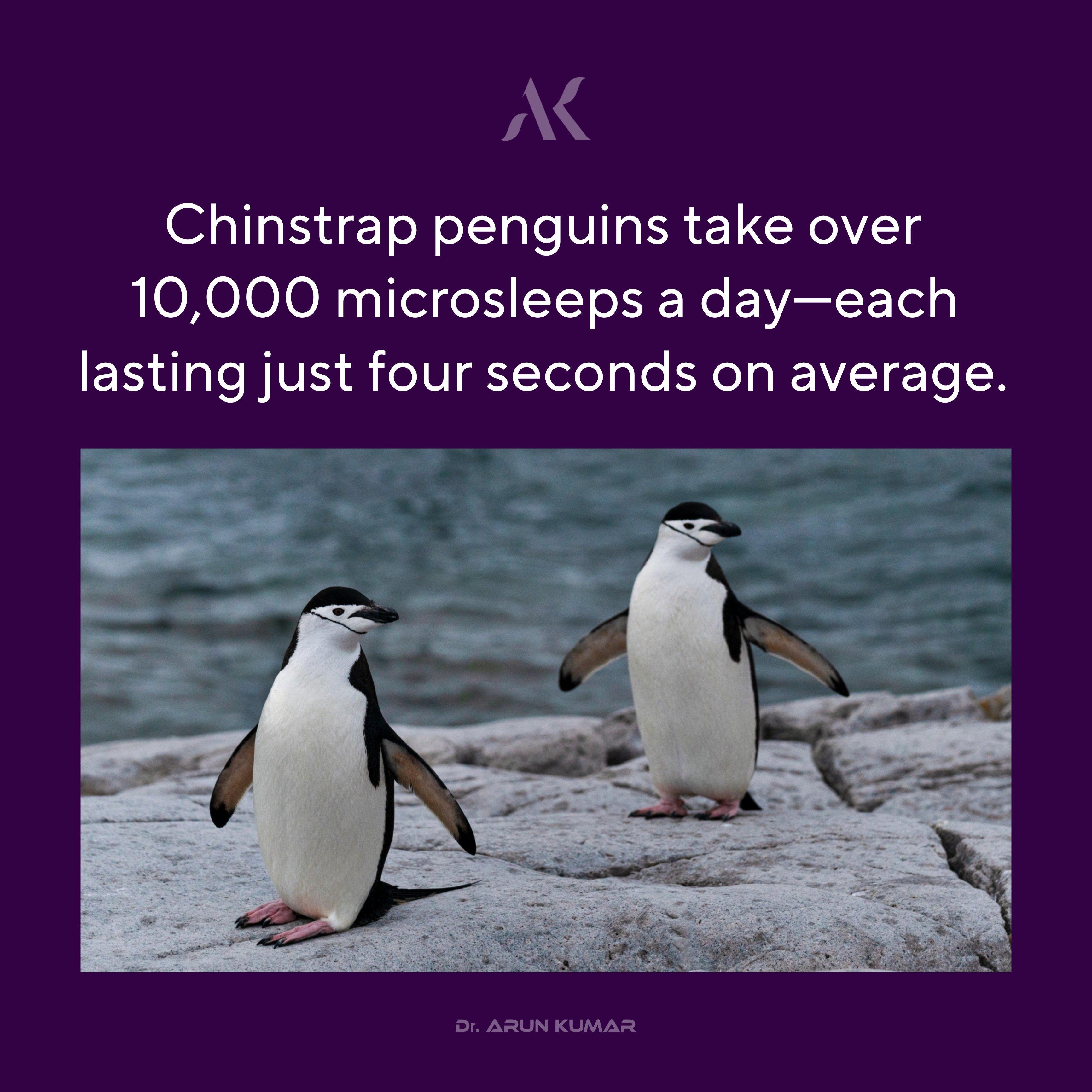


A groundbreaking study published in Science revealed that nesting chinstrap penguins in Antarctica accrue roughly 11 hours of sleep daily through more than 10,000 four-second microsleeps. This extreme pattern of fragmented rest allows parents to constantly guard their eggs and chicks from predators.
Why They Do It
▫️Constant Danger: Brown skuas hunt penguin eggs, and nearby neighbors are aggressive.
▫️Parental Duty: While one mate hunts at sea, the other stays behind to protect the nest.
▫️11 Hours Total: These tiny four-second naps add up to a full day of rest over thousands of attempts.
How the Brain Rests
▫️Bouts of Sleep: Both halves of the brain or just one half can drop into slow-wave sleep at a time.
▫️Incremental Benefits: The research shows that sleep benefits can build up in tiny bursts rather than long, uninterrupted blocks.
#ChinstrapPenguin
#AnimalFacts
#DidYouKnow