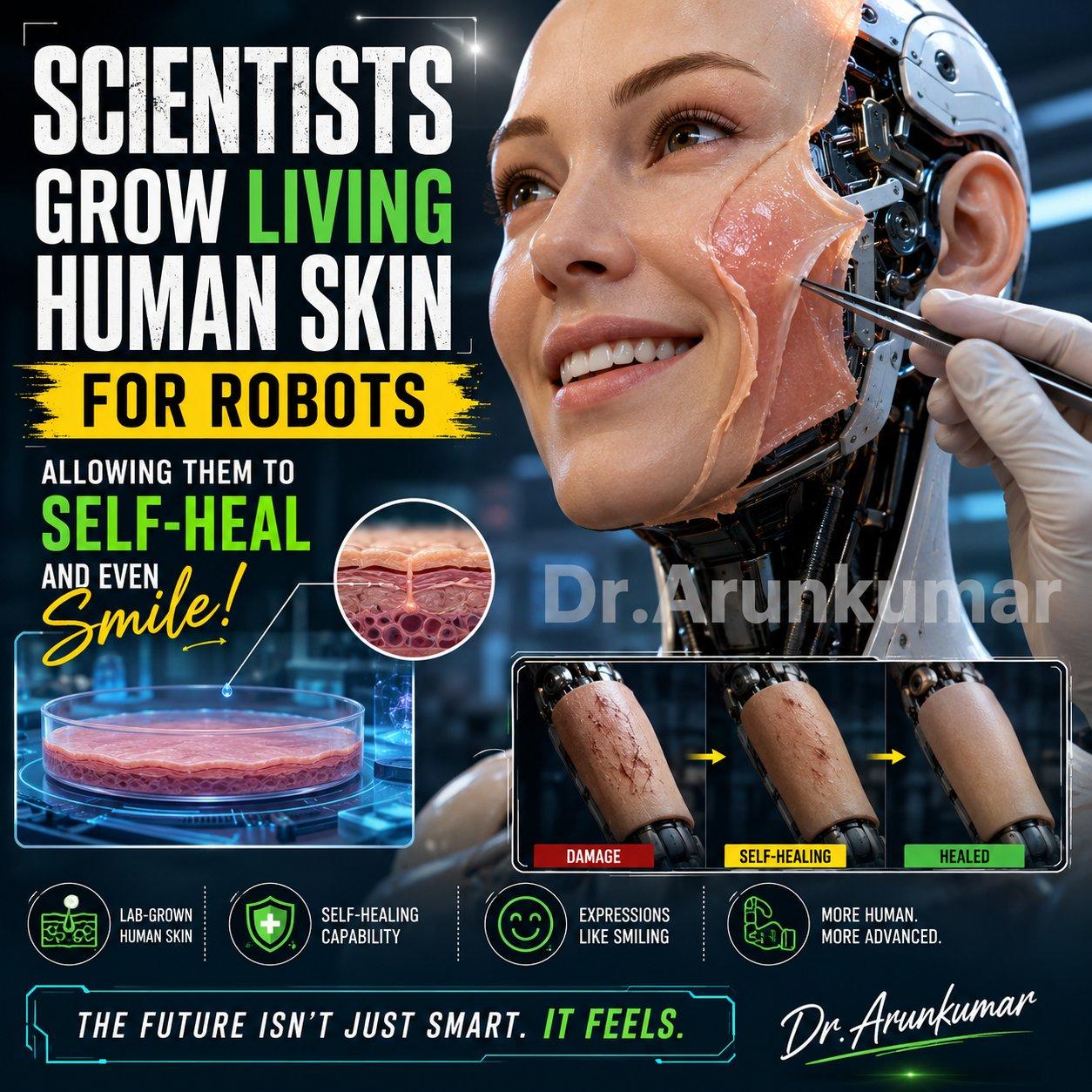


Japanese researchers at the University of Tokyo's Biohybrid Systems Laboratory have successfully grown and attached living human skin to robot faces. Using specialized V-shaped anchors inspired by human skin ligaments, this lab-grown tissue can stretch over robotic features, enabling natural facial expressions like smiling and self-healing when damaged.
The Innovation Behind the Skin
▫️Researchers led by Prof. Shoji Takeuchi achieved this by cultivating a mix of cultured human skin cells in a lab. To ensure the skin moves realistically without tearing or separating as the robot moves, they utilized tiny, V-shaped anchors (perforation-type anchors). By drilling tiny holes into the robotic framework and applying a collagen-based gel, the researchers created a method that seamlessly binds the soft, lifelike skin layer to complex, moving surfaces.
Why This Matters
▫️Beyond making humanoid robots appear incredibly lifelike, this breakthrough holds vast potential for other fields. The ability of the tissue to repair itself—much like real human wound healing—paves the way for advancements in medical training, cosmetic testing, and plastic surgery research.
#BiohybridRobotics
#HumanoidRobot
#FutureTech
#Biotech