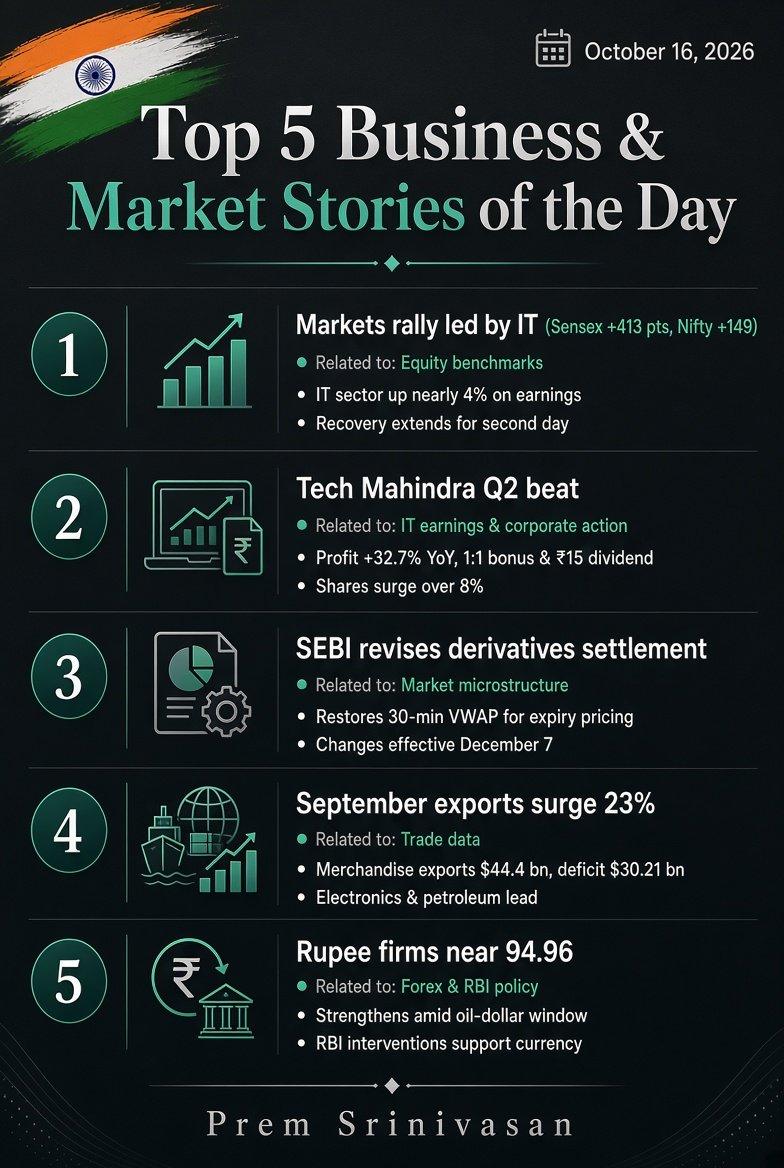
Modi Ji's appeal to citizens worked again.
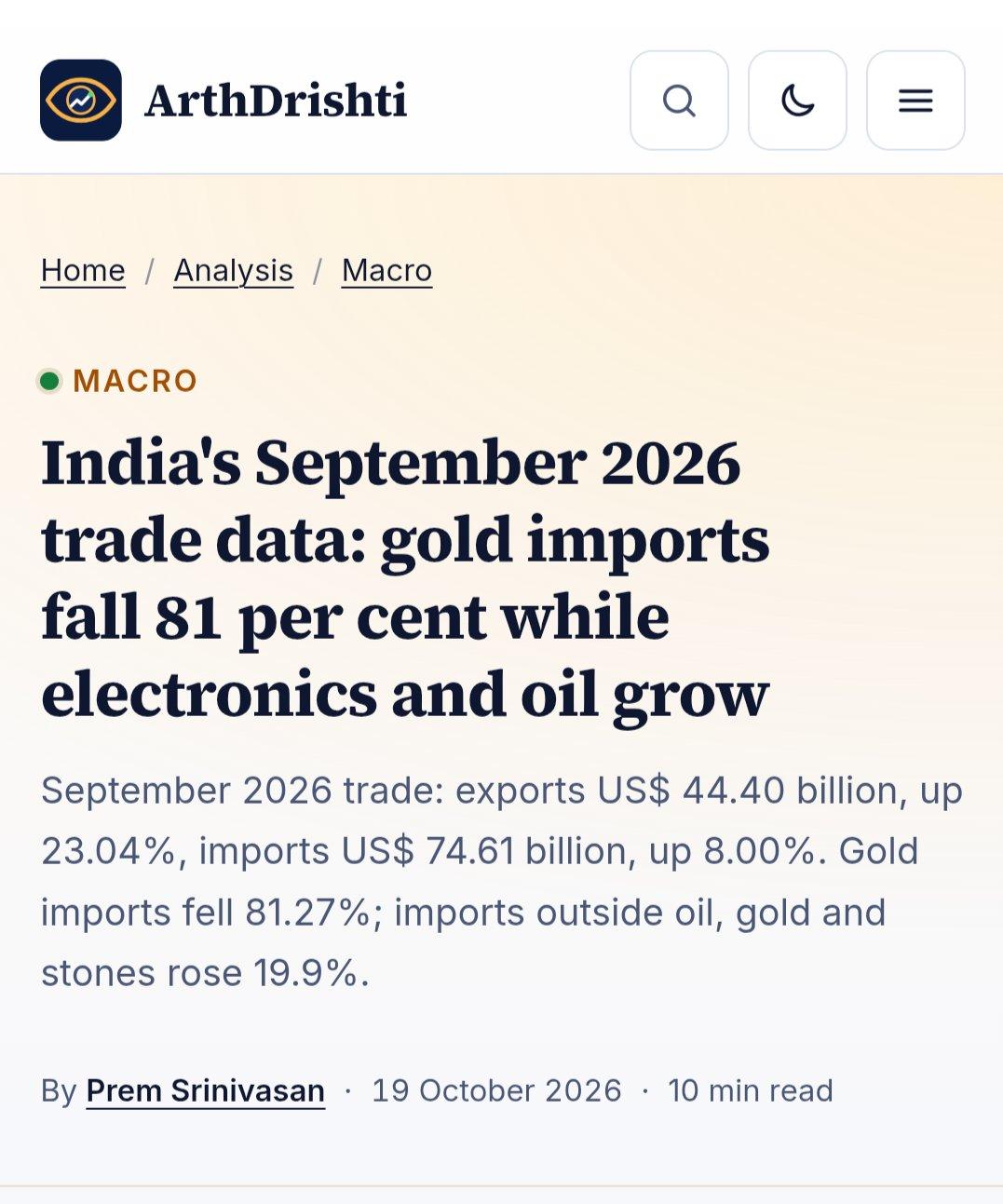
Gold imports are down by 81%, and now the government has blocked paper gold investments.
The next data release will show how much people remember about the appeal which the PM made.
Expected fall in MRP is upto 70 percent depending upon their previous prices.
Congress-led bots on X and Instagram will target the Finance Minister once again as pharma and hospital stocks are expected to fall for the short term. Probability is less though.
My reading is that the market is clever enough to understand that this move will increase the sales volume multifold over the long term, so stock prices will adjust very soon, or you might not even notice the price fluctuations.
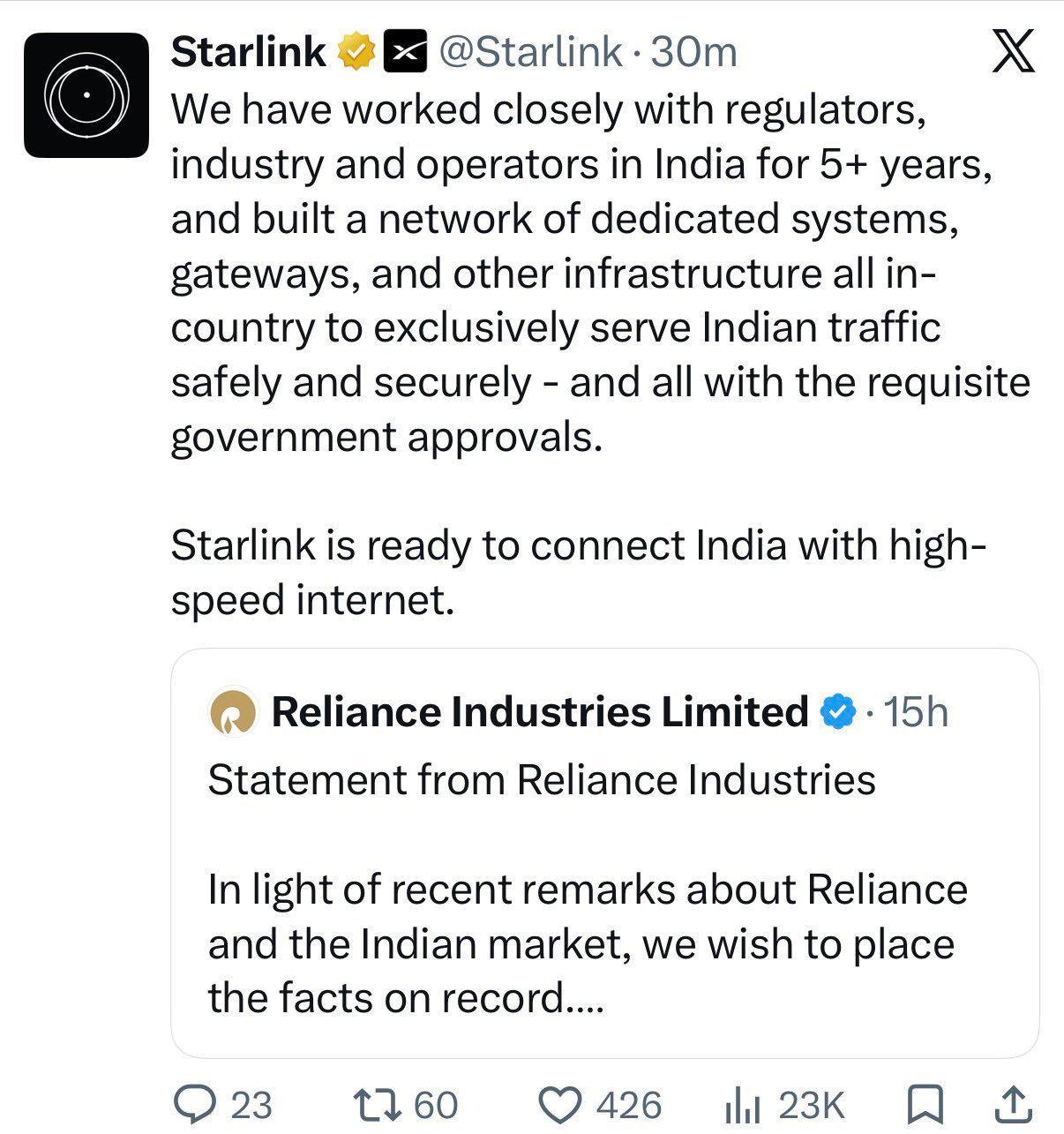
None of the three has launched commercial satellite broadband in India yet. All are waiting for spectrum assignment and final security clearances.
Partnerships
Jio has a joint venture with SES (51:49) for GEO and MEO capacity. It also signed a 2025 distribution deal with Starlink. It is preparing its own sovereign constellation of around 1,600 LEO satellites (future plan).
Airtel has a major stake in Eutelsat OneWeb and also signed a 2025 distribution deal with Starlink.
Can Starlink work without them?
Yes. Starlink has its own licence and ground infrastructure and can sell directly. The deals with Jio and Airtel are mainly for distribution, retail support and installation help.
Existing infrastructure advantage (Indian customer view)
Jio and Airtel can make the service easier and more practical for Indian customers through their retail network, bundling with existing mobile or fibre plans, EMI style hardware payments, local installation support and hybrid terrestrial plus satellite services. This is their main edge. Starlink has the advantage on pure satellite capacity and latency.
Expected costs
Starlink: Analyst estimates of ₹2,500 to ₹3,500 per month for retail, plus hardware of ₹33,000 to ₹34,000. Official price is not confirmed (a higher test listing was removed).
Airtel / OneWeb: No consumer price published. Mainly enterprise and custom contracts. Professional terminals are costlier.
Jio / SES: No official price. Enterprise oriented. Hardware is likely to be subsidised or bundled for existing customers.
Retail versus enterprise focus
Starlink’s core strength is retail and rural residential broadband. In India, early uptake is expected to be heavier on enterprise and remote sites because of high costs.
Customers they are targeting
Jio: Enterprises, small and medium businesses, mobile backhaul, remote communities, schools and health centres. Also retail customers for Starlink kits. Future own LEO plan also covers defence, maritime, aviation and direct to device.
Airtel: Enterprises, government, maritime, aviation, business customers and remote communities. Also retail equipment sales for Starlink.
Defence and international deals
Airtel / OneWeb: Used by the Indian Army and Navy (Myanmar relief, Sri Lanka floods, Navy voyage). Strong international deals including French Armed Forces (up to €1 billion) and UK government worldwide.
Jio / SES: Indian defence trials done. Future sovereign LEO plan is positioned for defence and national security. No major public international defence satcom deals yet for the joint venture.
Technology comparison
Starlink: LEO at around 550 km, about 11,000 satellites, latency around 25 to 60 ms. Best on speed, latency and capacity.
Airtel / OneWeb: LEO at around 1,200 km, about 650 satellites, latency around 40 to 70 ms. Better for enterprise service levels and polar coverage. Adding more satellites for capacity, but staying at higher orbit.
Jio / SES (current): Higher latency GEO and MEO. Own LEO plan (aligned with 6G non terrestrial network) is still a proposal.
Other points
Satellite will remain much costlier than fibre or fixed wireless for most users and is mainly useful for hard to reach areas. Jio is integrating satellite into its 6G roadmap. Sovereignty and data control are key themes for Jio’s own constellation.
Might be India also wants to reduce its number of banks and prepare for CBDC complete rollout
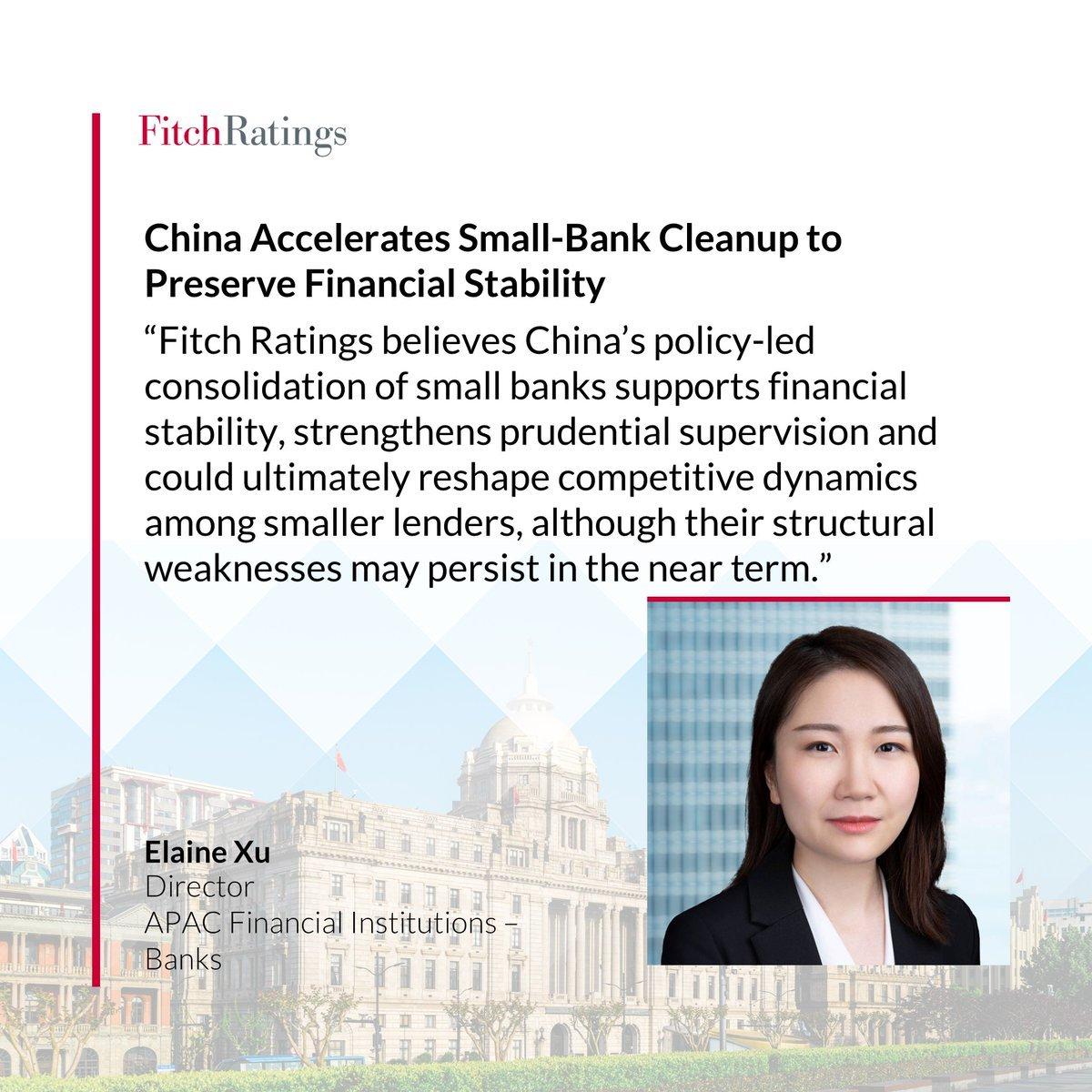
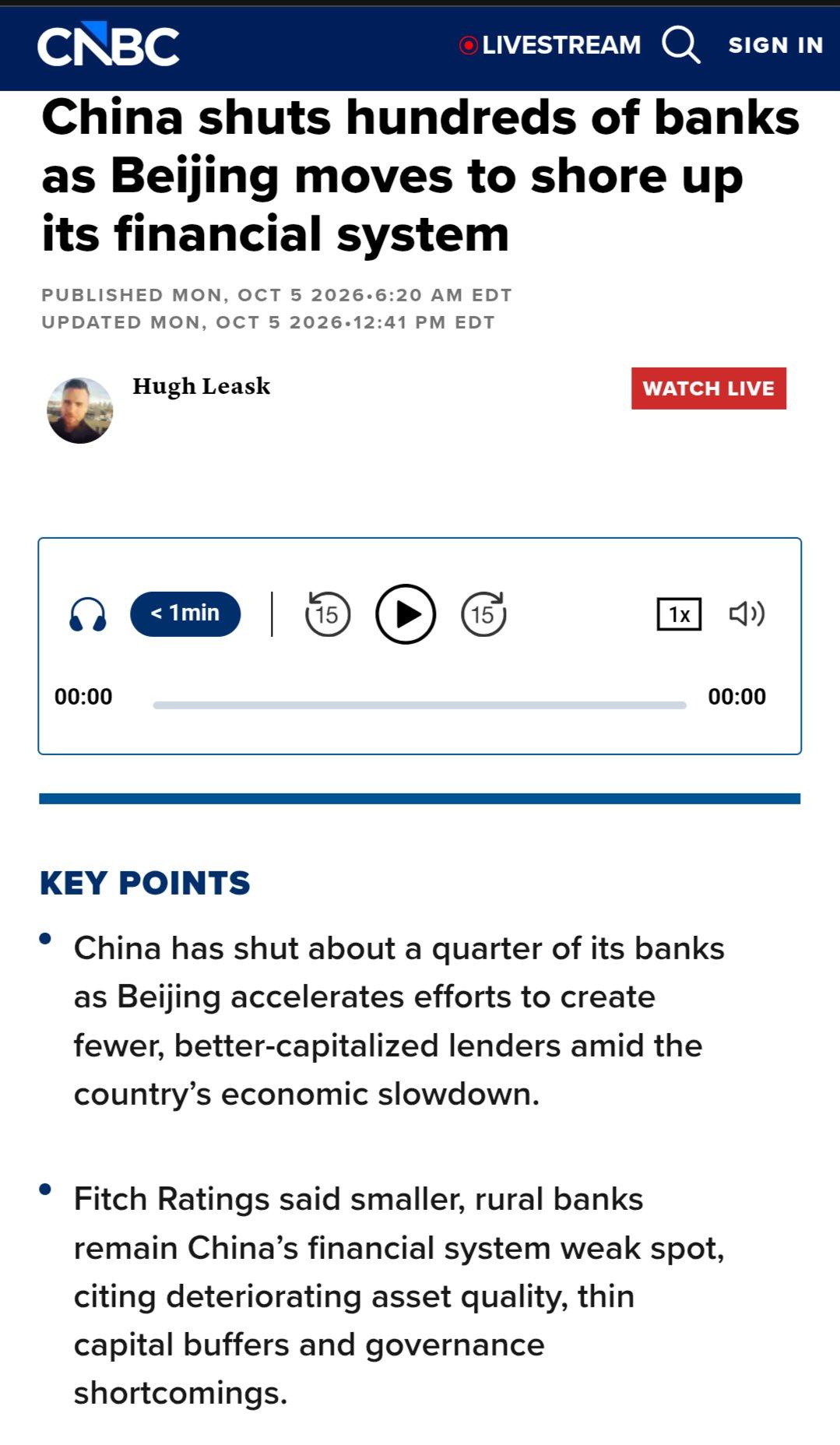
China has been reducing the number of banks for the past few years. The numbers below were making rounds on social media and might not be trustworthy. But CNBC and Fitch did cover the story.
Year-by-year reductions (from Chinese reports citing regulator lists) roughly looked like this:
2021: very small decline
2022: 35
2023: 77
2024: 195
2025: 670 (sharp acceleration)
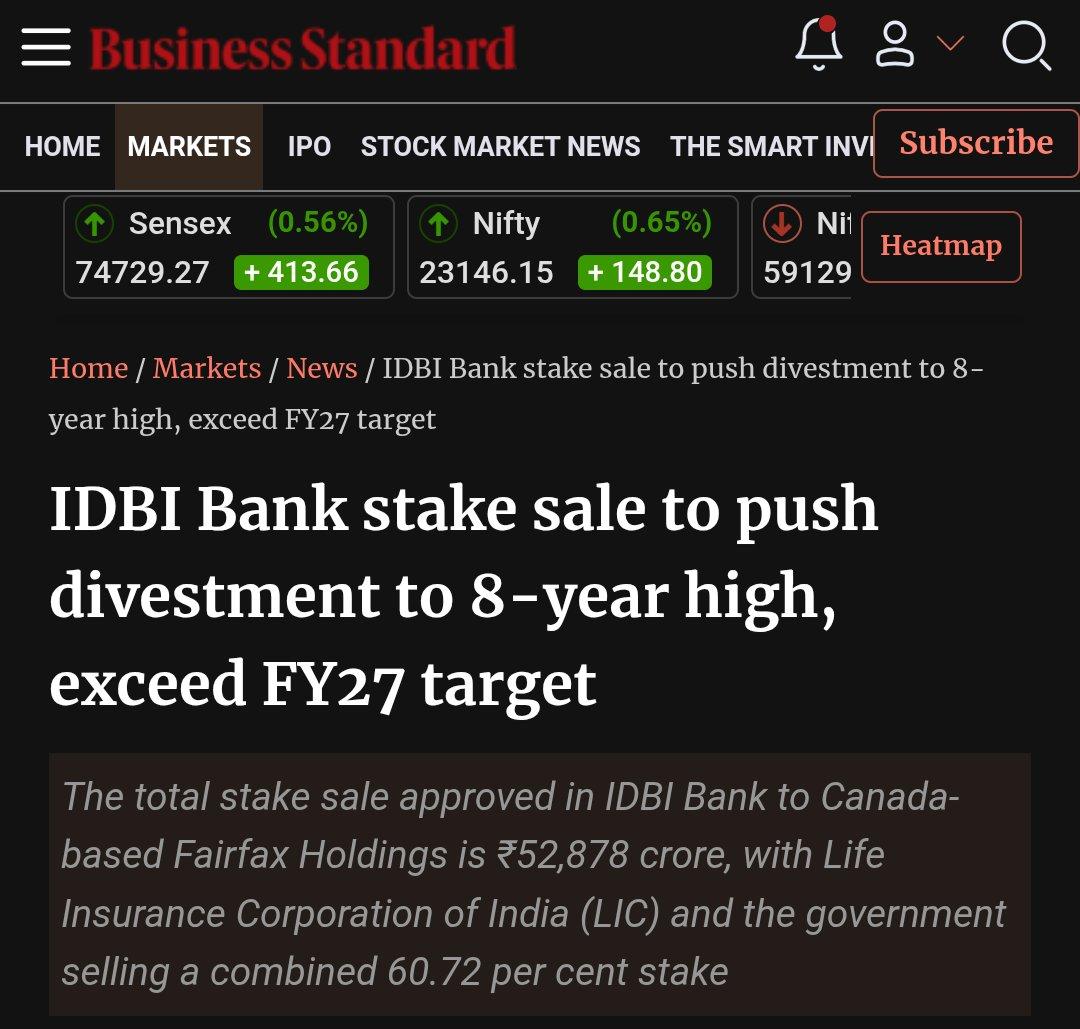
Probably, it was the right call to sell IDBI bank because India has already spent crores and crores to clean up its balance sheet and we don't want to get into cleaning up again.
And it also gives us the opportunity to reduce the number of banks because we won't need more banks after CBDC is fully rolled out.
RBI will be taking care of the system mainly, such as using ULI systems and other systems.
Prem Srinivasan@premsrinivasan·
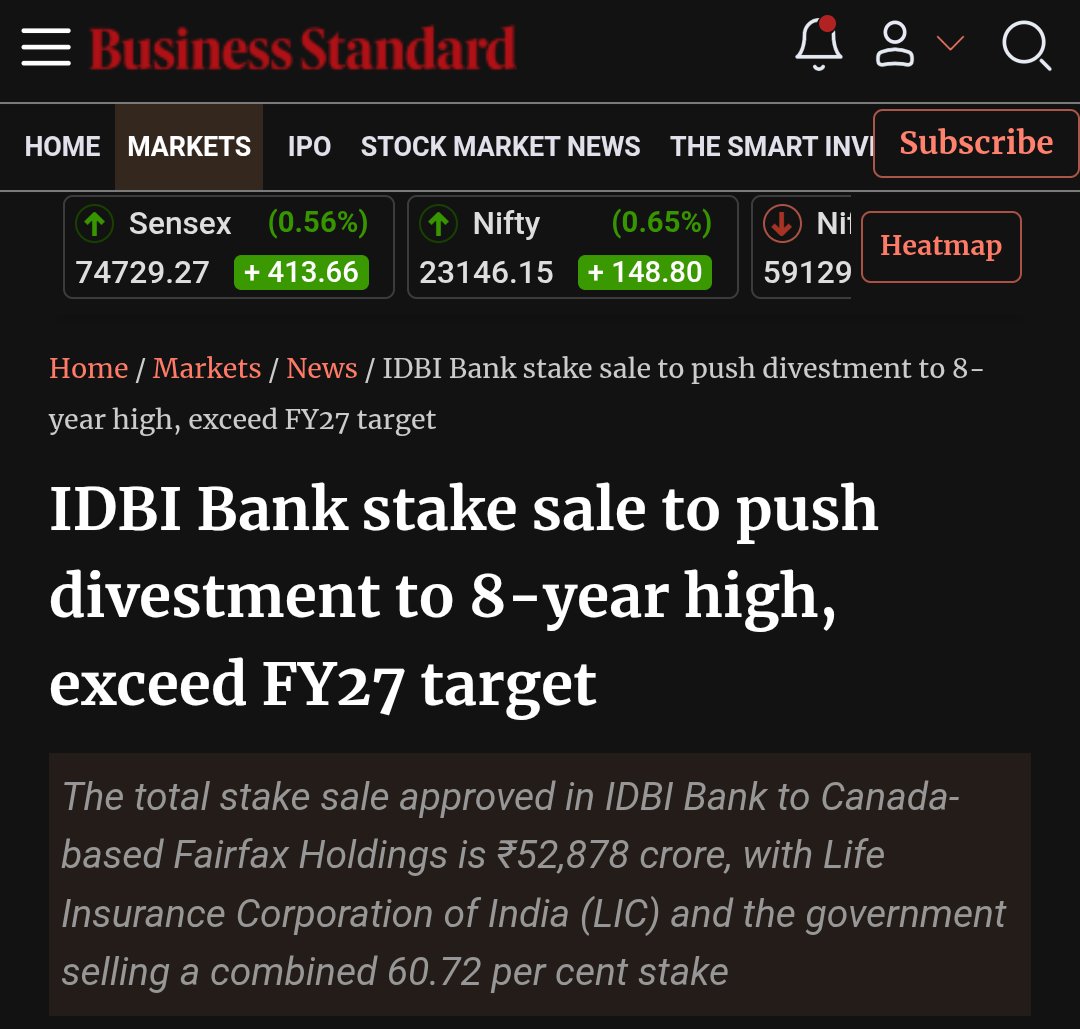
Indian Government is the clear winner in the IDBI stake sale of roughly 60 percent to Canadian company Fairfax, run by Indian origin Prem Wasta.
Fai...
IDBI Bank ko Prem Watsa ke gale mein daal diya… lekin remote control apne paas hi rakh liya. 👌
Indian Government is the clear winner in the IDBI stake sale of roughly 60 percent to Canadian company Fairfax, run by Indian origin Prem Wasta.
Fair valuation came around 76 Rs per share, market price was around 95 Rs per share and government sold it for 81 Rs per share.
Here are the reasons why I think Indian Government made a good deal:
Voting is permanently capped at 26%.
Economic majority does not equal voting control.
Government + LIC residual will hold 34% which can still block special resolutions.
Forced dilution over 15 years which means Fairfax will have to sell down later; uncertain pricing and potential overhang is the real risk for Fairfax.
CSB Bank conflict must be resolved (merge or exit) within two years. Neither option is clean or guaranteed to be value accretive.
Management control is real on the board, but shareholder voting power is constrained, and culture/employee resistance from the old PSU structure remains a practical risk.
In nutshell
Government exits cleanly with cash and residual upside. Fairfax gets a reasonably priced platform with control of operations, but not full voting control and with regulatory strings attached.
The structure is deliberately asymmetric in the government’s favour on governance rights.
A list of probable stocks which can benefit from the surge in reasoning-driven AI compute demand:
Tata Consultancy Services (TCS)
Enterprises require end-to-end modernization and pipeline re-architecting to integrate complex reasoning models.
TCS benefits from large-scale enterprise AI transformation contracts and proprietary AI application deployment.
Infosys
Advanced inference requires deep domain orchestration and multi-agent workflow engineering.
Its Topaz AI suite positions it directly to capture corporate spending on agentic reasoning workflows.
HCL Technologies
Higher compute intensity demands robust hybrid cloud management and edge computing engineering.
Strong capabilities in digital engineering and AI infrastructure services drive sustained service integration revenue.
Tata Elxsi
Reasoning-heavy AI is critical for complex autonomous systems, medical diagnostic models, and intelligent robotics.
Generates high-margin design and product engineering revenue as connected hardware integrates deep inference capabilities.
L&T Technology Services (LTTS)
Industrial automation and smart mobility require massive real-time inference at the edge.
Captures demand from global clients embedding specialized AI logic into complex operational technology.
Persistent Systems
Mid-tier enterprises rely on agile software engineering partners to build custom reasoning layers and agentic tools.
High exposure to software product engineering enables direct participation in building specialized inference architectures.
Tata Communications
Exponential compute growth triggers massive data movement between distributed data centers and edge nodes.
Benefits from soaring demand for high-bandwidth, low-latency inter-datacenter connectivity and cloud interconnection fabric.
Bharti Airtel
Massive inference workloads rely on carrier-grade low-latency 5G transport networks for edge computing delivery.
Its Nxtra data center business directly monetizes rising hyperscale AI server colocation and power consumption.
Reliance Industries (Jio Platforms)
Operates large-scale national cloud and data center infrastructure partnering with global chipmakers for sovereign AI compute.
Captures consumer- and enterprise-level AI inference demand across India's domestic digital ecosystem.
Netweb Technologies India
Heavy inference clusters require specialized high-performance computing (HPC) server builds and liquid cooling setups.
Acts as a direct domestic manufacturing partner for GPU-dense AI supercomputing servers and high-density storage.
Kaynes Technology India
High-density AI computing systems demand high-complexity printed circuit boards (PCBs) and smart power modules.
Benefits from advanced electronics manufacturing services (EMS) for AI hardware, networking gear, and power electronics.
Schneider Electric Infrastructure
AI server racks consume exponentially more electricity, creating severe power-density and thermal management challenges.
Supplies mission-critical power distribution units, busbars, and intelligent data center power infrastructure.
Hitachi Energy India
Hyperscale AI data centers require dedicated high-voltage grid interconnections and substation capacity.
Provides heavy-duty grid connectivity, power quality solutions, and transformers to handle massive data center electricity loads.
Tata Power
Compute-heavy reasoning operations run 24/7, driving continuous baseload and renewable power contracts.
Direct beneficiary through long-term power purchase agreements (PPAs) tailored for energy-intensive hyperscale data centers.
NTPC
A billion-fold increase in compute requires massive, uninterrupted round-the-clock power generation at national scale.
Anchors the thermal baseload and expanding clean-energy mix required to keep AI infrastructure continuously energized.
How much savings do we make approximately and what are the key drivers?
From the recent peak of 96.85 to around 94.96, the rupee is stronger by about 1.89 per dollar.
India’s top 3 import segments are:
Petroleum/crude and its products
Electronic goods
Gold
Total bill run at roughly $360–365 billion a year, or about $990–1,000 million a day. Roughly $1 billion.
Daily rupee saving on this import bill is around 1,850–1,900 crore. Roughly 2000 crores is the daily saving.
As a rule of thumb, you can say that, in the current setup, we save 1,000 crores with every one rupee appreciation on the exchange rate.
This is a simple arithmetic estimate based on the exchange rate gap applied to the average daily value of those three segments.
Actual daily savings will vary with oil prices, volumes, and the exact mix ofiall the mports.
Key Drivers Pulling USD/INR Down
RBI FX Intervention is working along with the liquidity measure it took as I discussed in one of the previous post.
Easing US yields and Federal Reserve rate-cut expectations are diminishing dollar demand.
Lower crude oil prices and declining oil import bills are reducing corporate dollar outflows from India's largest import sector.
Renewed foreign portfolio buying in Indian equities and sovereign debt is boosting INR demand.
Exporters are hedging near multi-week highs, paired with ECB and FDI inflows and hence supply fresh dollar liquidity to the market.
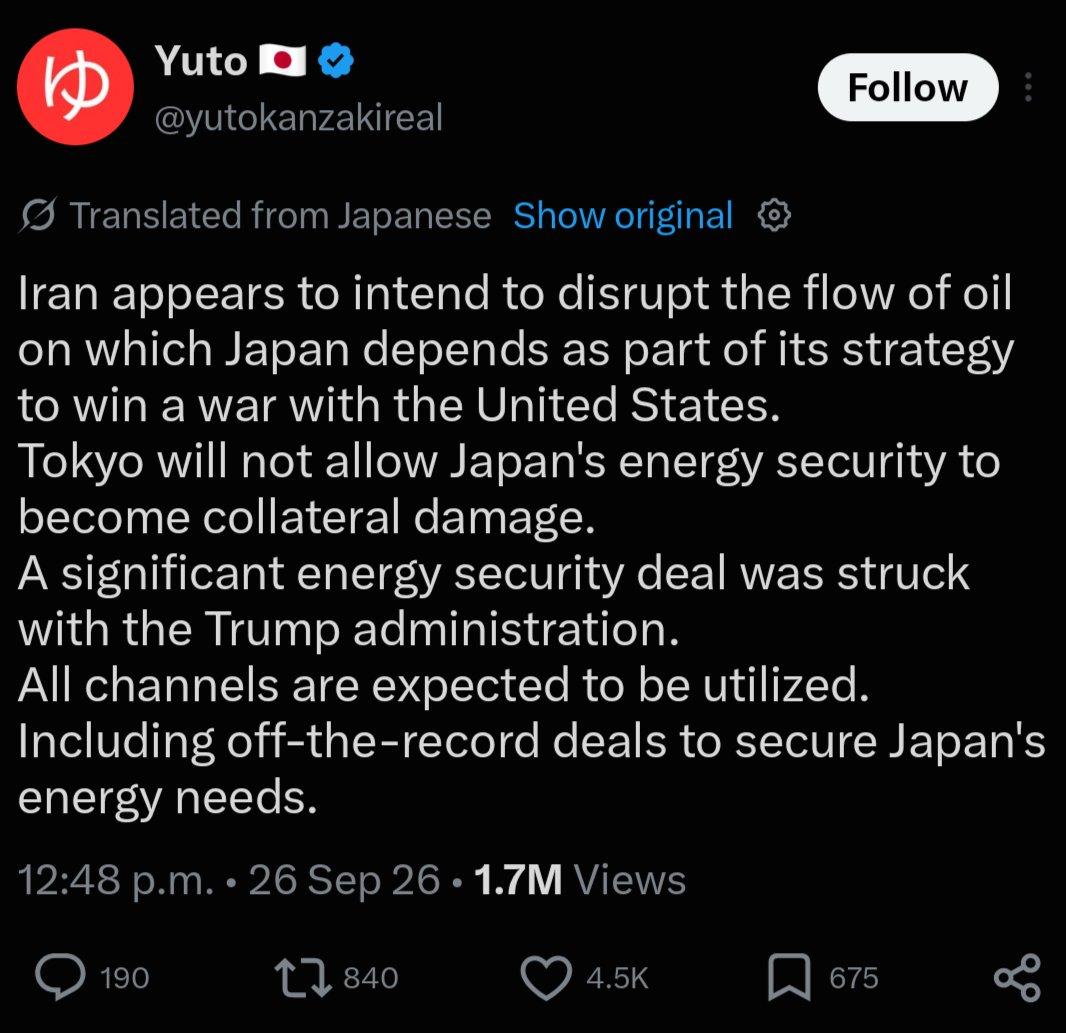
The possibility of Japan buying oil in Yen is increasing. If this happens, we will witness one of the most devastating financial crises or meltdowns of our lifetime.
The chain that markets worry about is roughly:
Oil priced in yen → less structural yen-selling → stronger yen → carry-trade unwind + Japanese capital repatriation → selling pressure on global assets and Treasuries → higher yields, tighter liquidity, and volatility spikes.
Please bookmark this post for future reference and share it to your friends and family.
When you share, the link is from Vync. We can get some more eyes on the app.